
How Much Should I Water My Lawn in Central Texas? (A Seasonal Guide)
Between scorching triple-digit summer heat, sudden dry spells, and heavy clay soil, keeping grass green in Central Texas can feel like a constant balancing act.
One of the most common questions we hear from homeowners in Belton, Temple, and surrounding communities is: “How much water does my lawn actually need?”
The short answer: Most Central Texas lawns (like Bermuda, St. Augustine, and Zoysia) need about 1 to 1.5 inches of water per week during the active growing season, delivered through deep, infrequent watering cycles.
However, watering too little will cause drought stress and allow weeds to take over—while watering too much (or at the wrong time) invites costly lawn fungus and root rot.
Here is our complete guide to getting your watering schedule right in Central Texas.
1. The Golden Rule: Water Deeply and Infrequently
The biggest mistake homeowners make is watering for 10 minutes every single day. Shallow daily watering keeps moisture right at the surface, which encourages shallow root systems that burn out the moment Texas temperatures hit 95°F.
Instead, aim for deep, infrequent watering:
- Water 2 to 3 days per week (adjusting for local city or HOA water restrictions).
- Apply approximately 0.5 inches of water per session to reach a total of 1 to 1.5 inches weekly.
- Deep soaking forces grass roots to grow deep into the soil profile in search of moisture, creating a resilient, drought-tolerant turf.
2. Seasonal Watering Guide for Central Texas
Your lawn’s water needs shift dramatically throughout the year. Here is how to adjust your irrigation controller by season:
🌸 Spring (March – May): The Green-Up Phase
- Frequency: 1 to 2 times per week (approx. 0.75″ to 1″ per week).
- Goal: Support root growth as grass breaks winter dormancy. Spring rains often cover a large portion of this need, so keep your rain sensor active.
☀️ Summer (June – August): Peak Heat & Stress
- Frequency: 2 to 3 times per week (approx. 1.25″ to 1.5″ per week).
- Goal: Combat high evaporation rates. If grass shows signs of heat stress (a dull bluish-gray tint or footprints that stay visible after walking across it), give it a deeper soak.
🍂 Fall (September – November): Recovery & Pre-Dormancy
- Frequency: 1 to 2 times per week (approx. 0.75″ to 1″ per week).
- Goal: Help your turf recover from summer stress and build carbohydrate reserves in the root system before the first frost.
❄️ Winter (December – February): Dormancy
- Frequency: Once every 2 to 3 weeks during prolonged dry spells (approx. 0.25″ to 0.5″ per month).
- Goal: Dormant grass still needs hydrated roots to survive freezing temperatures, especially if Central Texas goes several weeks without winter rain.
3. What Time of Day Should You Water?
The best time to water is between 4:00 AM and 6:00 AM.
- Why morning? Temperatures are cooler and winds are calm, minimizing evaporation. It also ensures the water penetrates deep into the soil before the afternoon sun arrives.
- Why not night? Watering late in the evening leaves grass blades wet overnight. In Central Texas, where humidity is already high, sitting water on turf creates the perfect breeding ground for lawn fungus and disease.
4. The “Tuna Can” Test: How to Measure 1 Inch of Water
Every sprinkler system puts out water at a different rate. To find out exactly how long to run each zone:
- Place 3 to 4 empty tuna cans or cat food cans across different spots in a single sprinkler zone.
- Run that zone for 15 minutes.
- Measure the depth of water in the cans with a ruler and calculate the average.
- The Math: If you collect 0.25 inches in 15 minutes, you need to run that zone for 30 minutes to deliver 0.5 inches per watering cycle.
5. Soil Compaction and Water Runoff
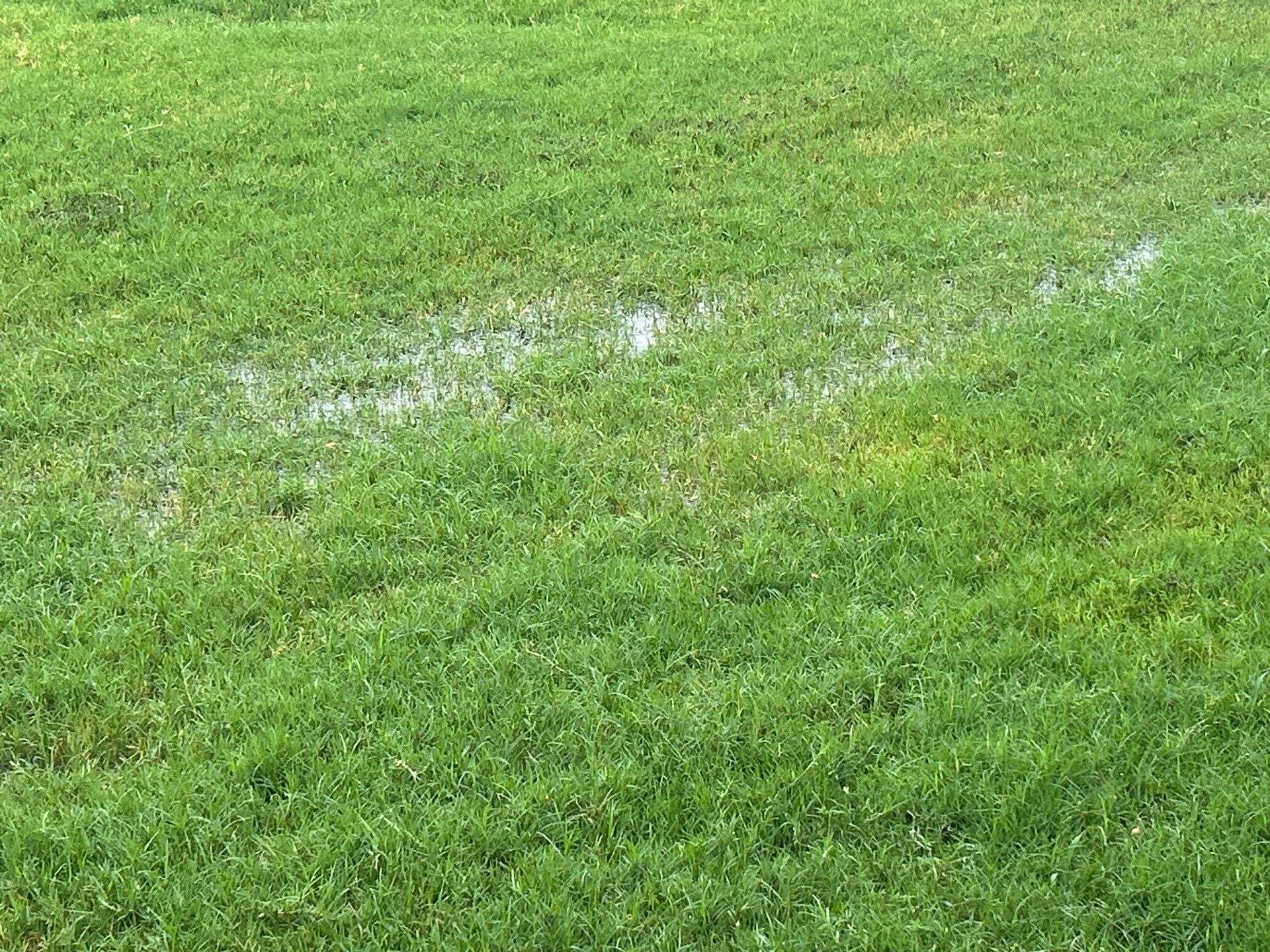
Do you notice water running down the street or pooling on the sidewalk before your sprinkler cycle even finishes?
Central Texas is known for dense, compacted clay soil. When soil is compacted, water cannot easily penetrate to the root zone.
To fix this, consider Liquid Aeration and Bio-Stimulants. Liquid aeration creates microscopic fractures throughout the root zone, breaking up compacted soil so that water, fertilizer, and micronutrients soak deep into the ground rather than running off into the gutter.
Great Lawn Care Starts with Teamwork
Professional weed control and fertilization programs work hand-in-hand with proper watering. At Marshall Lawn Solutions, our treatments are specifically designed for Central Texas lawns that receive regular watering and mowing.
When you enroll in our 8-Visit Weed Control and Fertilization Program, we include complimentary watering consultations during our visits to help you fine-tune your sprinkler schedule throughout the year.
For more watering information, check out Cycle and Soak Irrigation – Marshall Lawn Solutions
Want a Thicker, Greener Lawn This Season?
Let the local experts take the guesswork out of your lawn care.
👉 Visit MarshallLawnSolutions.com to get a free quote on our 8-visit program and keep your lawn healthy all year long!
