
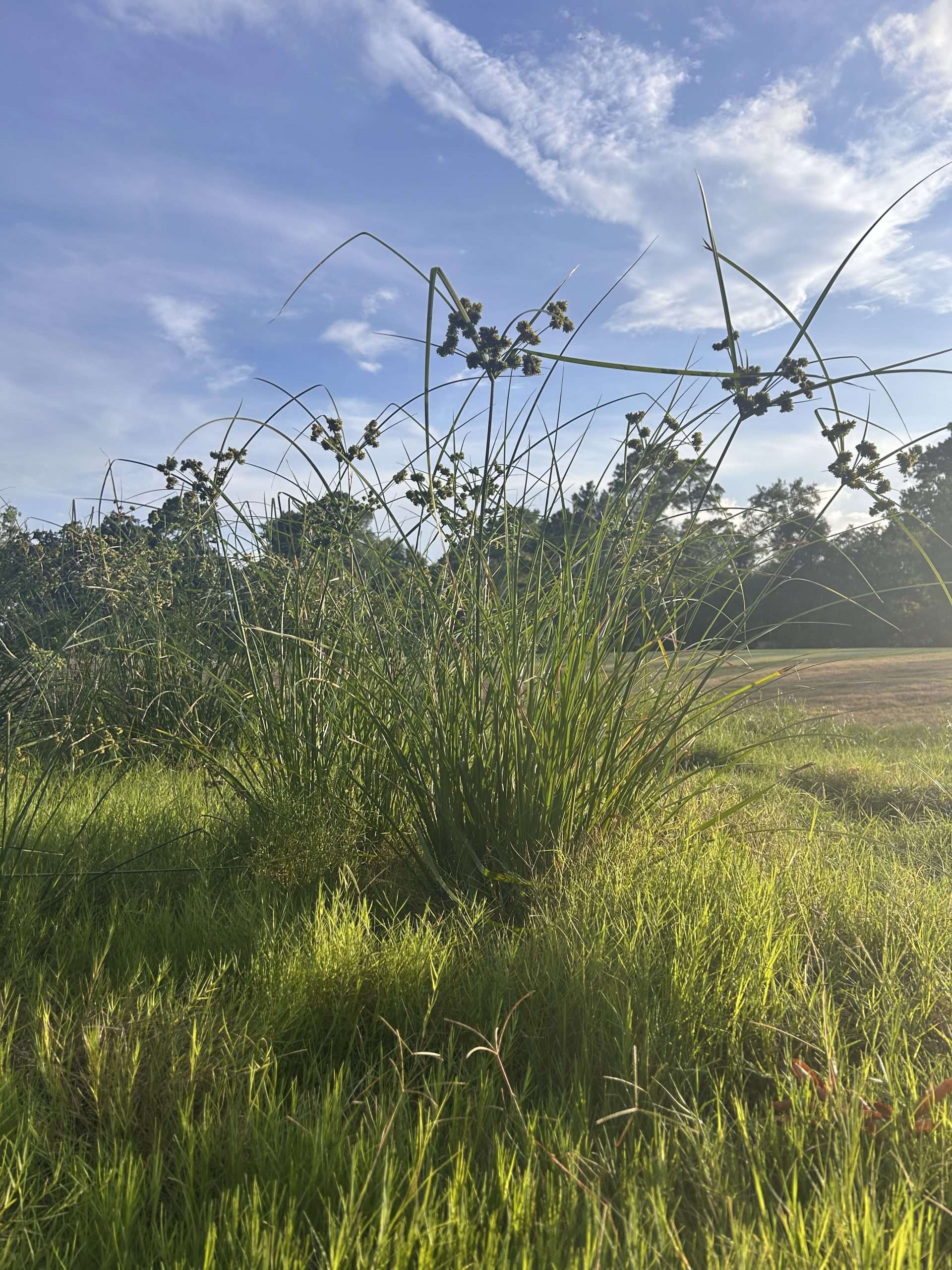
Yellow Nutsedge in Your Lawn: How to Identify, Prevent, and Control It
Have you noticed a bright yellow-green weed growing faster than the rest of your lawn? It may not be grass at all. In many Central Texas lawns, this fast-growing invader is yellow nutsedge.
Yellow nutsedge can appear suddenly, especially after heavy rain, overwatering, or periods when the soil stays damp. Because it grows faster than surrounding turf, it can quickly stand out as uneven, yellow-green patches in an otherwise healthy lawn.
What Is Yellow Nutsedge?
Yellow nutsedge is a grass-like weed, but it is actually a member of the sedge family. That distinction matters because many common lawn weed treatments are designed for broadleaf weeds or grassy weeds and may not effectively control sedges.
Nutsedge often becomes noticeable during warm weather when moisture is plentiful. In Central Texas, it may appear in areas affected by irrigation, drainage problems, compacted soil, or stormwater runoff.
How to Identify Yellow Nutsedge
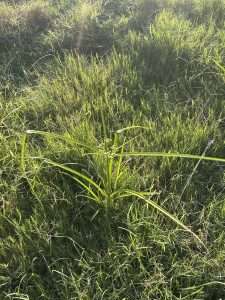
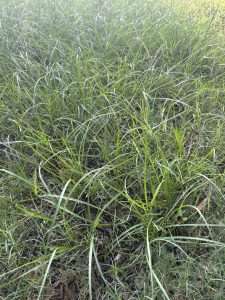
Yellow nutsedge can be mistaken for a rapidly growing grass, but several characteristics make it easier to identify.
1. Bright yellow-green color
The plant is usually lighter and more yellow-green than the surrounding turf. This color difference is often the first thing homeowners notice.
2. Faster growth
Nutsedge can grow significantly faster than the lawn around it. You may mow your grass and notice that a few yellow-green plants are already standing taller again a short time later.
3. Shiny leaves
The leaves often have a glossy or shiny appearance. They may look thicker and more upright than the blades of your turfgrass.
4. Leaves arranged in groups of three
Yellow nutsedge leaves typically grow in sets of three around the stem. This pattern can help distinguish it from ordinary grass.
5. A triangular stem
One of the simplest identification tests is to gently roll the stem between your fingers. Grass stems are generally round, while nutsedge has a distinct triangular stem.
A common saying is, “Sedges have edges.” If the stem feels angular or three-sided, you may be dealing with nutsedge rather than grass.
Where Does Yellow Nutsedge Grow?
Yellow nutsedge thrives where the soil remains consistently moist. It is especially common in areas that do not drain well or receive more water than the surrounding lawn.
Look for it in places such as:
- Low spots in the yard
- Areas near downspouts
- Along drainage paths
- Around sprinkler heads
- Near leaking irrigation lines
- Areas that stay damp after rain
- Compacted soil where water cannot move easily
- Sections of lawn that are overwatered
If nutsedge repeatedly appears in the same location, the weed may be pointing to an underlying moisture or drainage issue—not simply a problem with the turf itself.
Why Does Nutsedge Appear After Rain or Irrigation?
Yellow nutsedge grows from underground structures called tubers, sometimes referred to as “nuts.” These allow the plant to survive below the soil surface and produce new growth when conditions are favorable.
When a lawn receives frequent rain or irrigation, the soil may stay wet long enough for dormant nutsedge tubers to become active. This is why homeowners sometimes notice nutsedge seemingly appearing overnight after a stormy period.
The weed is not necessarily a sign that your entire lawn is unhealthy. It may be concentrated in one or two areas where moisture, compaction, or drainage is different from the rest of the property.
Can Pulling Yellow Nutsedge Solve the Problem?
Pulling nutsedge may remove the visible plant temporarily, but it often does not eliminate the underground tubers. If the tubers remain in the soil, new growth can return.
Repeatedly disturbing the soil may also spread or reposition underground plant parts, making long-term control more difficult. That does not mean touching the plant automatically causes it to multiply every time, but hand-pulling alone is usually an incomplete solution.
For that reason, the best approach is to address both:
- The visible weed
- The conditions allowing it to thrive
If you pull it, avoid shaking soil or leaving plant material in contact with moist areas of the lawn. More importantly, monitor the area for regrowth.
How to Prevent Yellow Nutsedge
Prevention begins with moisture management and turf health. You may not be able to eliminate every source of water, but you can make the lawn less favorable for nutsedge.
Water deeply but less frequently
Frequent, shallow watering can keep the upper layer of soil constantly damp. Instead, water deeply enough to support healthy turf while allowing the soil surface to dry between irrigation cycles.
The correct schedule depends on your grass type, soil, weather, sun exposure, and local watering restrictions. Avoid automatically running irrigation every day unless your lawn truly needs it.
Correct drainage problems
If water consistently pools in the same location, inspect the cause. Possible issues include:
- A low area in the lawn
- A clogged or poorly positioned downspout
- Compacted soil
- An irrigation head spraying too much water
- A leaking sprinkler or underground line
- Runoff from a driveway, sidewalk, or neighboring property
Treating the weed without correcting the drainage issue may only lead to repeated appearances.
Check sprinkler coverage
A malfunctioning sprinkler head can create a small wet zone where nutsedge thrives. Look for overspray, broken heads, leaks, or areas receiving significantly more water than the rest of the lawn.
Improve turf density
A thick, healthy lawn naturally competes with weeds by occupying available space, using water efficiently, and shading the soil. Proper mowing, fertilization, weed control, and watering all contribute to stronger turf.
For most lawns, avoid removing more than one-third of the grass blade during a single mowing. Scalping or severely stressing the lawn can create openings where weeds gain an advantage.
Reduce soil compaction
Compacted soil limits water movement and restricts root growth. If water sits on the surface or the soil stays soggy after irrigation, compaction may be part of the problem.
Improving soil structure and water infiltration can help create better growing conditions for turf while reducing the wet, compacted areas nutsedge prefers.
How Is Yellow Nutsedge Controlled?
Because yellow nutsedge is a sedge rather than a typical broadleaf weed or grass, it may require a targeted treatment. The correct product and application timing depend on the turfgrass, the size of the infestation, weather conditions, and the product label.
Professional treatment can help identify whether the problem is nutsedge and determine whether the lawn also has an irrigation or drainage issue. Applications should always follow the product label and account for turf safety, weather, pets, and watering requirements.
Do not assume that a general weed killer will control nutsedge. Using the wrong treatment can waste money, injure desirable grass, or leave the underground tubers unaffected.
A Simple Nutsedge Inspection
If you suspect yellow nutsedge, inspect the area using these questions:
- Is the plant brighter yellow-green than the surrounding grass?
- Is it growing faster than the turf?
- Do the leaves appear shiny?
- Are the leaves arranged in groups of three?
- Does the stem feel triangular?
- Is the plant growing near a sprinkler, downspout, or low spot?
- Does the soil stay wet after rain or irrigation?
- Has the same area produced nutsedge before?
The more answers that are “yes,” the more likely you are dealing with yellow nutsedge.
Final Thoughts
Yellow nutsedge is more than a cosmetic lawn problem. Its presence often indicates that a section of the yard is staying too wet, receiving too much irrigation, or struggling with compaction or drainage.
The most effective long-term strategy is to combine:
- Correct identification
- Targeted weed control
- Proper watering
- Improved drainage
- Healthy, dense turf
If yellow-green weeds keep returning in the same areas of your Belton or Central Texas lawn, Marshall Lawn Solutions can help identify the problem and recommend the next step. Our weed control and fertilization program is designed to support thicker, healthier turf while addressing the weeds that commonly affect local lawns.
Contact Marshall Lawn Solutions for practical recommendations for controlling nutsedge and improving your lawn’s growing conditions.
